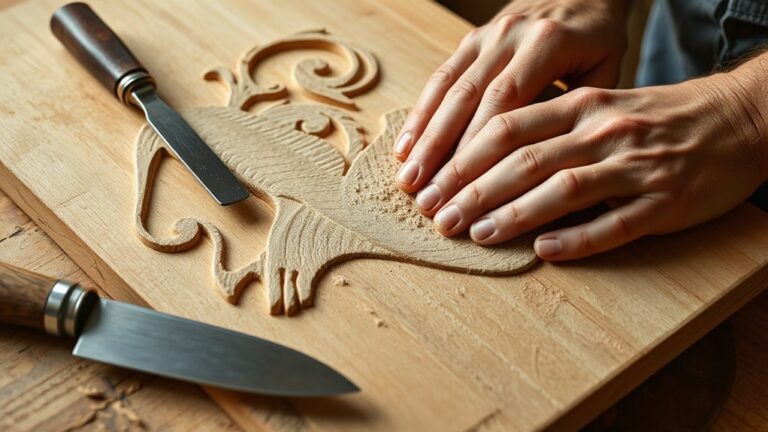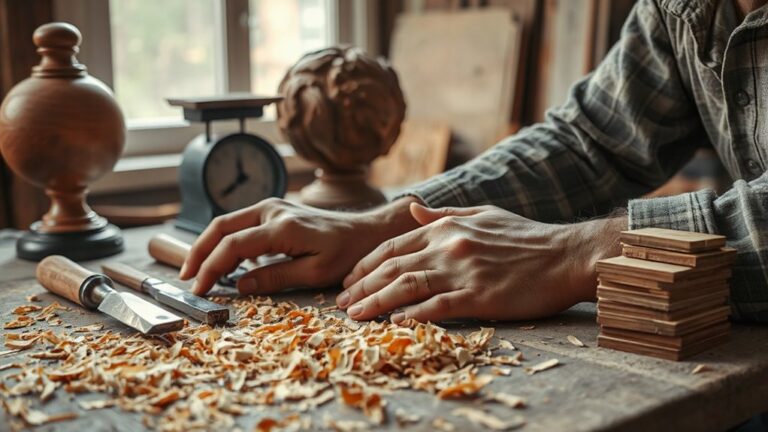
Here are some useful household items to carve:
You can start carving easy, useful items right away, like a small spoon or a wood tray.
Pick soft wood such as basswood so cuts feel friendly and mistakes aren’t costly.
Learn hollowing for boxes, and finish with mineral oil to keep utensils safe for kitchen use.
Carving lets you mix function with art, so your pieces become helpers and chat with guests.
Stick with basic shapes first, and you’ll discover what comes next.
Getting Started: Your First Wood Carving Project

You can start today with a simple wooden spoon or a tiny figurine, and still feel proud. You learn by trying, so pick a soft wood and hold the chisel with care. Wood selection matters, but you can begin with easy steps and grow. Keep your cuts light, practice safety, and enjoy small wins. As you carve, notice how steady hands and focus improve, then sharpen edges with basic tool sharpening tips. Soon you will shape bowls or figurines you can brag about, and your confidence will rise while you laugh at tiny mistakes. Keep experimenting and share your progress. A single, quality fixed-blade knife is all you need to begin, and maintaining its sharpness through frequent stropping ensures better control and blade sharpness.
Functional Boxes and Trays: Hollowing, Joints, and Finishes
Once you hollow a small box, shape a smooth cavity without thinning the walls. Next, test wall thickness and keep the interior even so it sits flat on the shelf. When you join the sides, use sturdy box joints and check the fit before the glue dries. For lids or trays, shape snug bases that stay level and look neat. Sand evenly, then apply a light finish that brings out the wood grain. Practice makes perfect, so start with simple sizes, measure carefully, and enjoy the rhythm of carving, shaping, and finishing with friends, and share tips. Choosing the right wood is essential for success, and basswood’s even grain makes it an excellent choice for clean, detailed hollowing and smooth finishes.
Quick-Creation Decoratives: Figures and Ornaments for Your Home
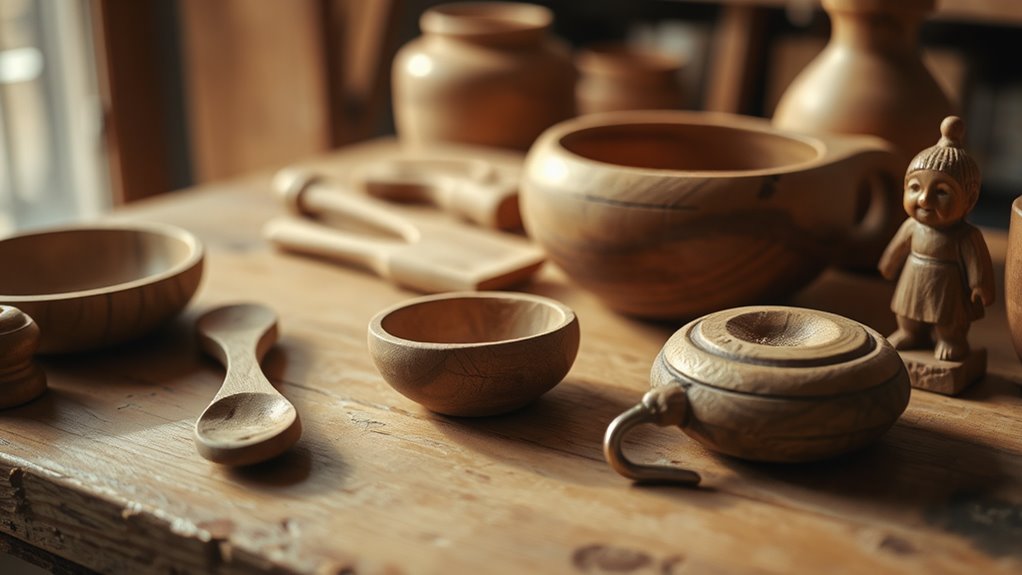
If you’re after quick, fun projects, decorative figures and ornaments are perfect for home. You can carve playful shapes like a smiling gnome or a tiny bird, and you’ll see fast results. Gnome carving feels rewarding as features come together quickly.
Try light cuts, use basswood for soft carving, and sand between steps for a smoother finish. When you paint, a thin coat of figurine paint adds color without hiding the wood grain. Keep projects small, about the size of a coffee mug, so you finish in one session. Display your work on shelves, and share joy with friends. Basswood’s straight grain ensures clean, predictable cuts, making it ideal for beginners and detailed designs straight grain.
Finishing, Maintenance, and Safety: Food-Safe Oils and Upkeep
After finishing quick decoratives, protect your wood with food-safe oils. Choose a food-safe oil such as mineral oil, and apply a thin coat. Let it soak briefly, then wipe away any excess for a smooth feel. Oil choice matters for wood protection, and the right option keeps flavors safe. Reapply every few weeks for weekly-use pieces, or when the finish looks dry. Store oils in a cool cabinet, away from heat, children, and pets. Always wash with warm soap after use, and dry promptly to prevent cracking. With proper upkeep and safe materials, your carvings stay usable and yours.
Frequently Asked Questions
How to Select Sustainable Wood for Carving Projects?
Choose reclaimed wood when possible so you don’t harvest new sources, and favor fast-growing species like poplar or bamboo; verify certification, source locality, and milling practices, then seal with a finish for a durable, sustainable carving.
What Basic Tool Maintenance Keeps Tools Sharp Longer?
Strop regularly and hone often to keep tools sharp longer. Inspect blades for nicks, clean after use, store tools dry, and maintain burr-free edges with light passes, steady pressure, and proper sharpening angles for durable performance.
How to Prevent Cracking in Carved Wooden Items?
To prevent cracking, carve with the grain, seal surfaces, and manage drying times. Patch end grain with stabilizers; avoid rapid drying, store wood evenly, and use stable finishes to minimize stress from moisture changes.
Best Practices for Labeling and Storing Finished Pieces?
Label each piece clearly with the maker’s name, completion date, and care instructions. Store pieces upright in a cool, dry place. For preservation, use wood-burning or paint finishes sparingly, rotate shelves if applicable, and protect pieces from moisture and direct sunlight.
Are Carved Items Dishwasher-Safe or Microwave-Safe?
Typically carved items are not dishwasher- or microwave-safe; wash by hand and avoid high heat or prolonged water exposure. Check finish coatings and wood types, opt for food-safe finishes and hardwoods to improve durability, then reapply finishes as needed over time using safe methods.
Conclusion
You can start carving today, even if you’re new to wood. Choose a soft, forgiving wood like basswood, and keep your tools sharp for easy cuts. Start with a simple spoon or a small tray, then add a tiny decorative gnome for fun. Finish with a food-safe oil and a light wipe so everyday pieces stay safe and pretty. Stay curious, practice regularly, and share your creations with friends who cheer you on daily.